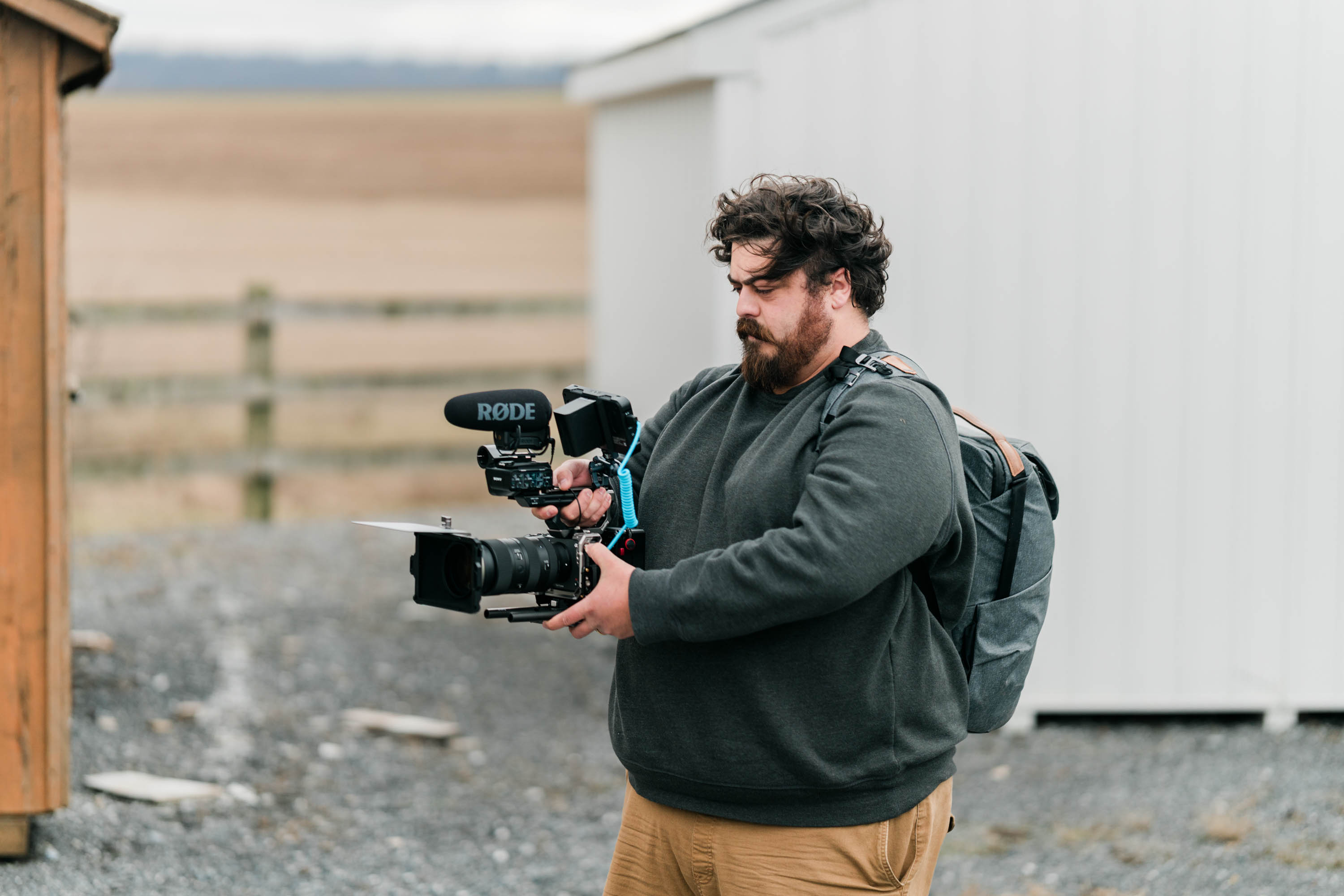
The owners who get the most out of their marketing budget aren't the ones with the biggest budget. They're the ones who plan a shoot day around the whole quarter, not one Instagram post. The difference between a shoot day that produces three weeks of content and a shoot day that produces three months of content isn't the budget. It's the planning.
Here's how we structure shoot days for clients who want a full quarter's worth of content out of a single production day, and why it works.
Start with the content calendar, not the shoot list
The first mistake most owners make is starting with what they want to shoot. The right starting point is what you need to publish. Open a calendar. Look at the next ninety days. Mark out every campaign, every product launch, every seasonal moment, every key sales window, and every weekly social post you want to publish during that quarter. Now you have a content calendar.
Once you have the calendar, the shoot list builds itself. Every piece of content on the calendar needs visuals. Some need photos. Some need video. Some need both. Group them by location, by setup, by wardrobe, and by who needs to be on camera. Now you have a shoot plan that maps directly to the actual content you're going to publish, instead of a shoot plan that hopes to fit something useful into the gap.
This is what we do with Star Quality and our retainer clients. The shoot doesn't happen in isolation. It happens because the next quarter of content needs specific moments captured, and the shoot is designed to capture those exact moments.
Plan for both formats in the same day
The second mistake is treating video and photography as separate shoots. They aren't. A single production day can produce both, if it's planned that way.
Here's how it works in practice. Every video setup has a still photographer pulling between camera angles. Every photo setup has B-roll being captured for short-form video. Wardrobe and location get reused across formats. The director runs both productions on a coordinated schedule, not as competing priorities.
This single decision, planning a combined shoot day, often doubles the output of a production day without doubling the cost. Most studios bill a combined day at maybe twenty percent more than a single-format day. The content you get is dramatically more than twenty percent more, because both formats are produced from the same setups, the same lighting, the same talent, and the same logistics. The math is unusually friendly to the buyer here.
Capture the foundational library on every shoot
Every shoot day should produce a few specific assets that the business will use for a long time, regardless of the campaign-specific content you're shooting that day. We call this the foundational content library, and it should be refreshed every quarter or every six months at minimum.
The foundational library for most businesses includes a brand story film of two to four minutes, a how-it-works video that walks through your process in plain language, product or service overviews at the level of a website explainer video, a small set of customer testimonial videos, frequently asked questions answered on camera, and a complete set of brand photography covering your workspace, your team, your product, and your real customers in action.
If your business doesn't have these assets, the first shoot day should produce them. Once they exist, every subsequent shoot day can focus on campaign content, seasonal content, and refreshes, because the foundation is already there.
Plan the cut-downs before you shoot
This is the part that separates a production day that pays off for three months from one that pays off for three weeks. Before the cameras roll, you should know every cut, every clip, every photo, and every post that's going to come out of the footage.
For a brand story film, that means planning the hero film, the sizzle cut, the short-form social clips for each platform, the website cuts, the email signature loop, the ad creative cuts, and any internal sales enablement cuts. Each of these needs different pacing, different framing, different audio decisions, different aspect ratios. If you don't plan them in advance, you're going to shoot a hero film and then realize after the fact that the footage doesn't quite work for the Instagram Reel you wanted.
Plan the cut-downs in pre-production. Shoot with them in mind. The edit gets faster, the deliverables get sharper, and the content actually fits the platforms it's destined for.
The publishing rhythm makes or breaks the output
Capturing a quarter of content in one day is the easy part. Actually publishing it on a rhythm that does the marketing work is the harder part, and where most businesses fall apart.
Once the shoot is in the can and the edits are complete, the content needs a calendar. A specific post on a specific platform on a specific day. Not whenever the team gets around to it. The calendar is what turns a content library into a marketing engine. Without it, the library sits in a Dropbox folder and the business goes back to phone snapshots within six weeks.
This is why we run quarterly content for our retainer clients. The shoot day produces the assets. The calendar and the deployment turn those assets into actual outcomes. Both halves are required.
How to know if a single shoot day is enough
Not every business can run their entire marketing operation on one shoot day per quarter. Some need more. Some need less. Here's the test.
If you're publishing on social once or twice a week, sending an email newsletter monthly, and running a small set of ads, one well-planned shoot day per quarter can probably cover you. The cuts and stills from a single day, used systematically across the quarter, can fill that publishing schedule with room to spare.
If you're publishing daily on multiple platforms, running paid campaigns on more than one channel, and producing video content for sales enablement at scale, you need more than one shoot day per quarter. Monthly might be the right cadence. Even more for some operations. The point is to match the production rhythm to the publishing rhythm, not to force one shape into another.
If you want to talk through it
If you're trying to figure out how to get more out of your content investment, or you want to plan a quarter ahead instead of scrambling for the next post, schedule a strategy call. We'll look at your content calendar, your sales rhythm, and your team's bandwidth, and we'll build a production plan that fits the size of the business. The point is to do this work once, well, in a way that earns its keep for the next ninety days.
.jpg)