
Lancaster County has more manufacturers than people realize. Tucked into the rolling fields between Ephrata and Lititz, behind the gas stations on Route 30, down the side roads near New Holland, there are companies building real products, employing real people, and shipping nationally and internationally from quiet operations that nobody outside the industry has ever heard of. Most of these manufacturers are excellent at what they make. Most of them are quietly struggling with the marketing side, because manufacturer marketing is its own animal and the generic small business playbook doesn't quite fit.
This article walks through what's actually different about marketing a manufacturer, what works in our specific market, and what to invest in if you're trying to grow without losing what makes the business work in the first place.
The sales cycle is long, and the marketing has to match
If you sell a swing set, the buyer goes from interest to purchase in a few weeks. If you sell a piece of industrial equipment, the buyer goes from interest to purchase in six to eighteen months. The marketing for a manufacturer has to live with that timeline, and most owners try to compress it to their detriment.
Trying to close a manufacturer sale with a marketing campaign timed like a retail launch doesn't work. The buyer isn't ready to buy after seeing two Instagram posts. They need to find you early, evaluate you slowly, and trust you completely before they sign a purchase order that might represent six or seven figures of capital. The marketing that wins for manufacturers is the marketing that shows up consistently across that long window.
Marcus Sheridan, who used to manufacture and install swimming pools, built his entire approach around this. The pool company that ranked first on Google for every honest question about pool ownership won by the time the buyer was ready to buy, because by then the company had already been quietly building trust for months. Same principle applies to manufacturers. The buyer who finds you in February when they're starting research, sees three articles answering questions they care about, watches a video walkthrough in April, gets a sales email in June, and finally calls in September has spent eight months getting to know you before the conversation ever started. That's the rhythm that wins.
The buyer is almost always a team, not a person
Retail buyers make decisions individually. Manufacturer buyers make decisions in committees. There's a technical evaluator looking at specifications. There's a financial evaluator looking at total cost of ownership. There's an operations evaluator looking at implementation logistics. There's an executive sponsor signing off on the budget. Sometimes all four are different people. Sometimes one person is wearing multiple hats.
Your marketing content has to speak to all of them. The technical content for the engineer. The cost-justification content for the CFO. The implementation content for the operations lead. The strategic content for the executive. Most manufacturer websites only speak to one of these audiences, usually the technical one, and lose the other three. The companies that win are the ones that produce content for every seat at the table.
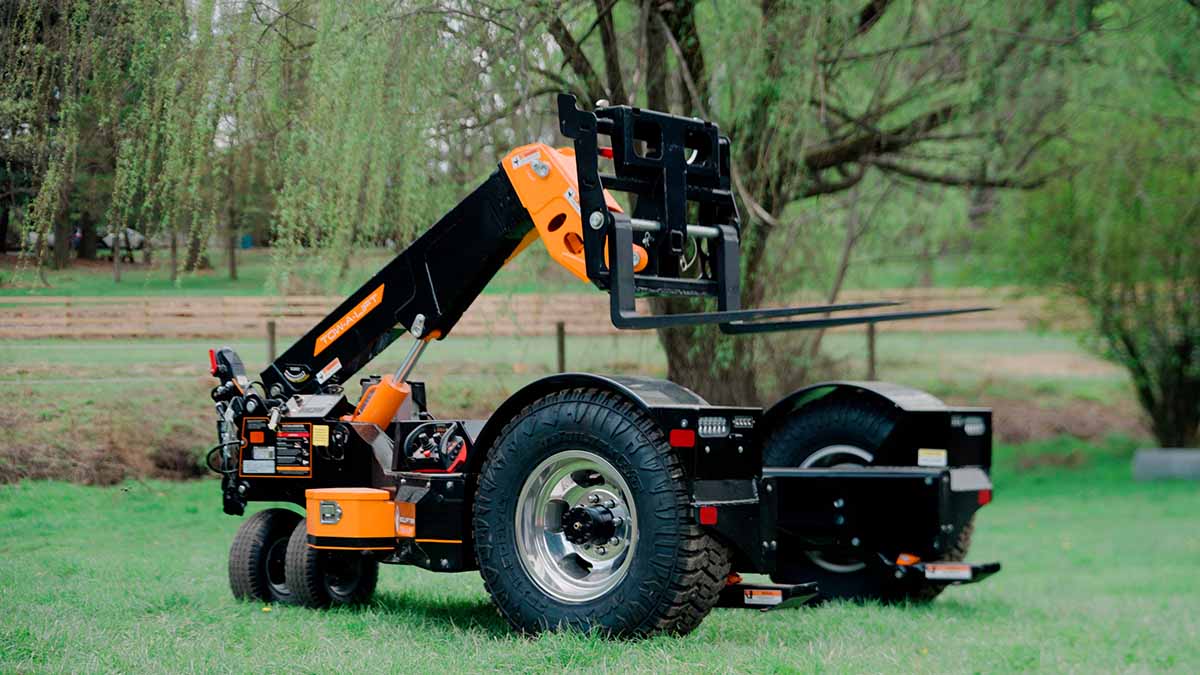
Equipter is a good example. The roofing buggy and the Tow-A-Lift are sold to roofing contractors, but the contractor making the call is doing the math on labor savings, job site safety, and customer experience all at once. The Stump & Root content for Equipter has to land for the contractor on the ground and for the company owner reviewing the capital expenditure. Different angles, same product, planned together.
Trade shows still matter, and the content around them matters more
Trade shows are not dead for manufacturers. If anything, they're more valuable now because the in-person evaluation is harder to replicate digitally and the buyer wants to see the product in person before signing off on a large purchase. But the marketing around the trade show is where most manufacturers leave money on the table.
The trade show booth is the front door. The marketing in the months leading up to the show is what determines how many people walk through it. The marketing in the months after the show is what converts the conversations into actual sales. Both halves are required, and most manufacturers focus on the show itself and treat the lead-up and the follow-up as afterthoughts.
The lead-up content is video, email, and social that puts your booth and your product in the buyer's head before they arrive at the show floor. The follow-up content is the email sequence, the personalized video walkthrough, the case study, and the proposal that turns a business card into a purchase order. Both phases benefit from the kind of content system that doesn't exist for manufacturers that book content production as a one-off.
Spanish-language content is an underused differentiator
Lancaster County has a significant Hispanic population, and many of the trades businesses that buy from local manufacturers have Spanish-speaking crews. The roofing contractor evaluating an Equipter has Spanish-speaking workers who will be running the equipment day to day. The siding company looking at a new tool wants the training material their crew can actually understand.
Producing Spanish-language versions of your product content is a relatively small additional investment that almost no competitor is making. The manufacturer that ships a Spanish-language product walkthrough alongside the English one is communicating something specific to the contractor about how much they care about real-world implementation. It's a quiet competitive advantage, and one of the few in this category where the marketing investment is small and the trust signal is large.
Photography is harder than people realize
Most manufacturer photography is bad in a specific way. It's either factory-floor product shots taken on a phone, or it's product-only studio shots with no context. The buyer looking at the photo can't tell what the product actually does, who uses it, or how it fits into their world.
Good manufacturer photography shows the product in real use. Equipter content shows the buggy in action on a roof, with a real crew, on a real job. Industrial equipment content should show the equipment running in a real facility, with operators who look like the buyer's operators, in lighting that reads as authentic rather than staged. The buyer's brain is asking can I see myself using this. Your photography either answers that question or it doesn't.
The website does more work than most owners realize
For most manufacturers, the website is the single most important marketing asset because it's the asset every other channel points to. The trade show conversation ends with an exchange of business cards and an invitation to visit the website. The email campaign drives clicks to the website. The video on social ends with a link to the website. If the website doesn't convert, none of the upstream work matters.
Donald Miller's StoryBrand framework applied to manufacturer websites is a much heavier lift than applied to retail. The customer is the hero, but who exactly is the customer when there are four different people at the buying table? The plan has to be clear, but there are multiple plans depending on which evaluator is reading. The CTA has to be specific, but the buyer isn't ready to buy yet so it can't be buy-now. The work of getting the website right is harder for manufacturers, and the leverage when it gets done right is bigger.
If you want to talk through it
If you run a manufacturer in Lancaster County or the broader Mid-Atlantic and you want to think through where your marketing should be investing right now, schedule a strategy call. We work in this category constantly. We know how the buying committees actually evaluate, where the trade show season pressure shows up, and which content investments produce real pipeline movement for manufacturers. Bring your real situation and we'll talk through what fits.
