
.jpg)
How Beuta got 11 million organic views with faux stone (and what it means for outdoor product brands)
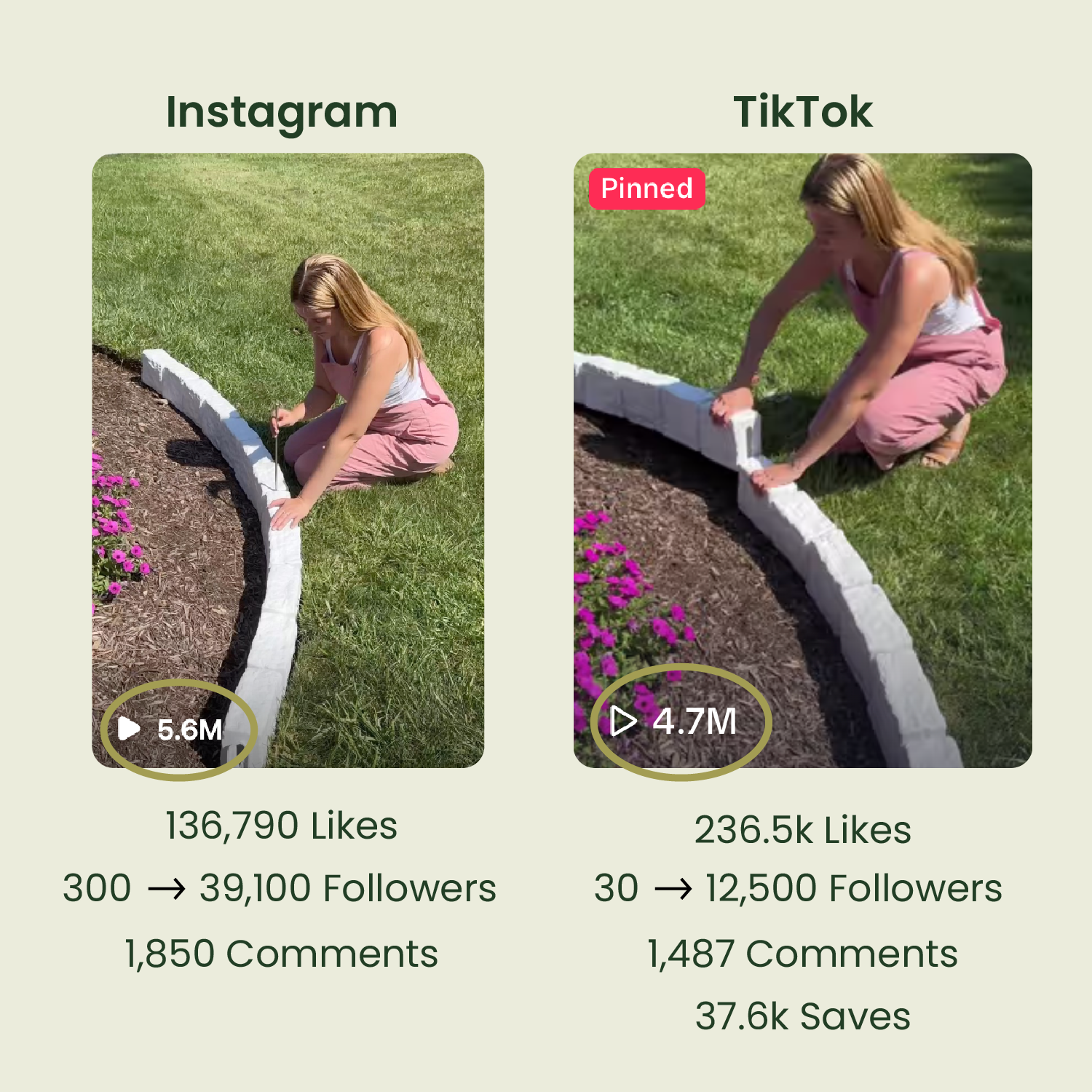
Would you believe me if I told you these weren't real rocks? That single sentence, delivered to camera while holding a handful of lightweight faux stones, became the opening of a video that broke 6 million views on Instagram and another 5 million on TikTok. Over 11 million organic views, no ad spend, for a company most people had never heard of.
This is the story of how that happened, what we learned from it, and why almost every outdoor product brand we talk to is leaving the same opportunity on the table. It's a long article. It's worth the read if you make or sell outdoor products and you've been wondering whether short-form video is actually worth the effort.
Before we get into the playbook, the short answer to that question is yes, with one significant caveat. Short-form video works for outdoor product brands when the product has a visual story worth telling and the team behind the camera knows how to find it. It doesn't work for everyone. It worked for Beuta. Here's exactly why.
The context: who is Beuta and what were we actually trying to do?
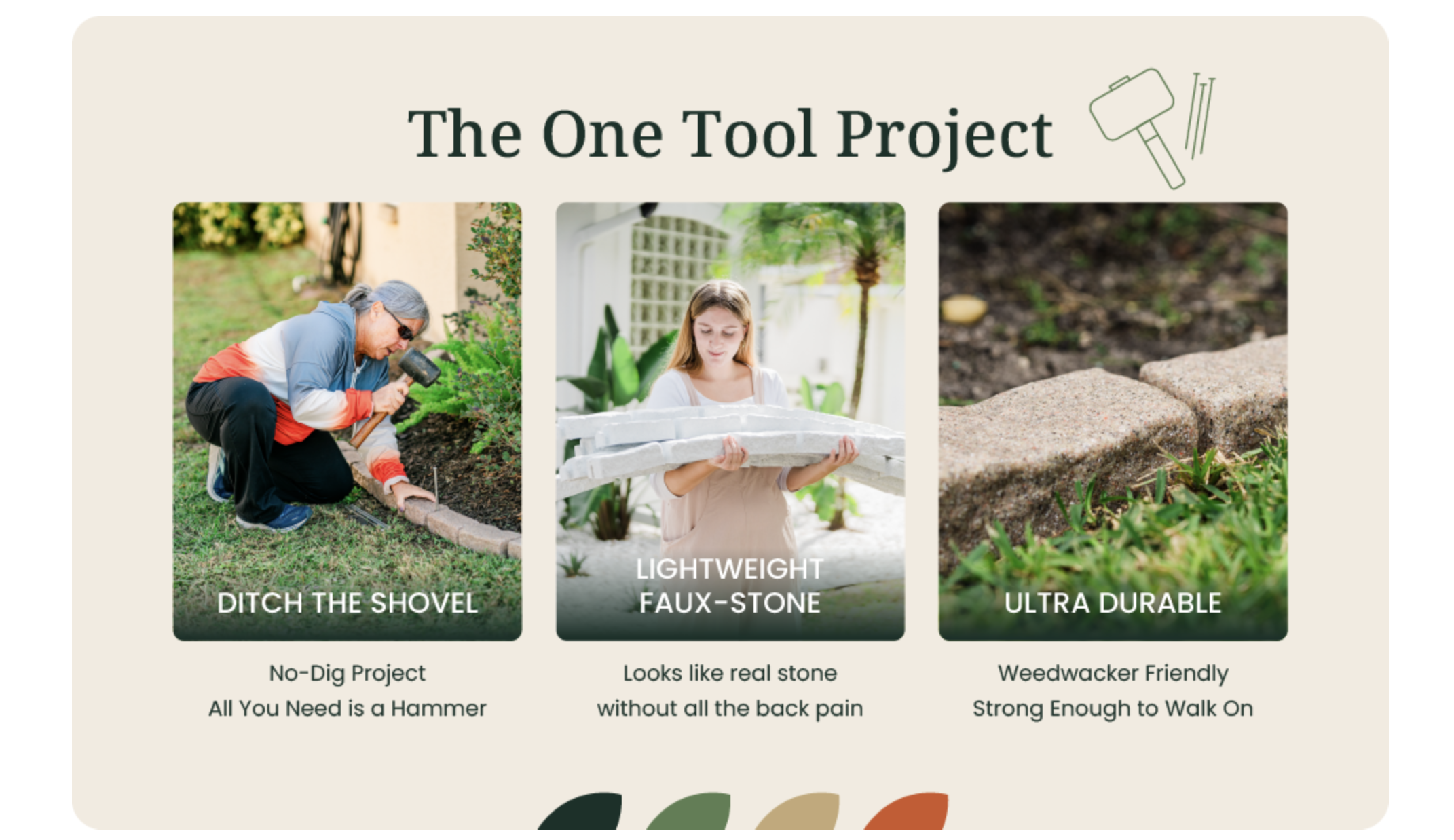
Beuta makes faux stone landscape edging. The product is lightweight, durable, and easy to install. It's the kind of product that solves a specific homeowner problem (the back-breaking weight of real stone, the time and labor of laying it correctly) but doesn't immediately advertise that solution from a photograph. Looking at a photo of Beuta, the average person assumes it's just stone.
When we started working with Beuta, the company had a real product, a growing customer base, and an inconsistent brand presence. The website didn't quite match the quality of the product. The Amazon store visuals were misaligned with the social channels. Video content was thin, and what existed wasn't doing measurable work.
So the starting point wasn't a flashy growth-hack strategy. It was foundational brand work. We audited the website, harmonized the brand voice across channels, overhauled the Amazon store visuals to match, and started building a real content pipeline. The viral piece came later, and it came out of that foundation.
The reason this matters is because most brands hoping for a viral moment skip the foundation. They want the 11 million views without the brand identity, the consistent visuals, and the strategic content rhythm underneath. It doesn't work that way. The viral moment lands on the foundation. Without one, the views don't compound into anything.
The strategic framework: why this campaign actually worked
Russell Brunson in DotCom Secrets makes a point about content that compounds. Most marketing is a flash of attention that fades. Compounding marketing is content that does the work, then keeps doing the work, then leads to more work being done. Viral short-form video, when it's built right, is the second kind.
The Beuta videos worked because four specific decisions stacked on top of each other. None of them are exotic. All of them are skippable, and most brands skip at least two.
First decision: lead with a hook that stops the scroll. Second decision: prove the claim visually within five seconds. Third decision: use trending sounds and SEO-rich captions as discovery infrastructure. Fourth decision: distribute across multiple platforms simultaneously, not sequentially. Together, those four decisions are the entire playbook. Let's walk through each one.
Decision one: the hook
.jpg)
The line at the top of this article wasn't found on accident. It was written with intent and refined for a specific job. The job of a short-form video hook is to interrupt a scroll, and the only way to do that is to introduce something the viewer can't immediately resolve. Curiosity is what stops thumbs.
"Would you believe me if I told you these weren't real rocks?" works because it creates a question the viewer has to answer. They can either keep scrolling and accept they'll never know, or stop and find out. Most stop. The hook is doing exactly what hooks are supposed to do.
Compare that to the kind of hook most product brands actually use. "Introducing our new line of faux stone edging." "Check out this product." "Have you tried our easy-install solution?" These aren't hooks. They're announcements. The brain processes them as an ad and disengages within a fraction of a second.
The principle behind the Beuta hook generalizes to almost any outdoor product. The formula is some version of: name the contradiction the customer wouldn't expect, frame it as a question or a challenge, and deliver it in the first 1.5 seconds of the video. For an outdoor structure company, that might be: "This shed was built in three days by hand without a single nail." For a landscape product, it might be: "This entire backyard transformation took less than a weekend." The specific words change. The pattern stays the same.
Marcus Sheridan in They Ask You Answer makes the case that the best content is built around the questions buyers are already asking. Hooks are the short-form version of that same principle. Find the question the viewer doesn't even know they have yet, and the video earns the watch.
Decision two: prove the claim within five seconds
.jpg)
A great hook with no proof feels like a cheap trick. The viewer's brain registers the contradiction, demands the resolution, and if the resolution doesn't come fast, the trust collapses. The video might still get watched, but it won't get shared.
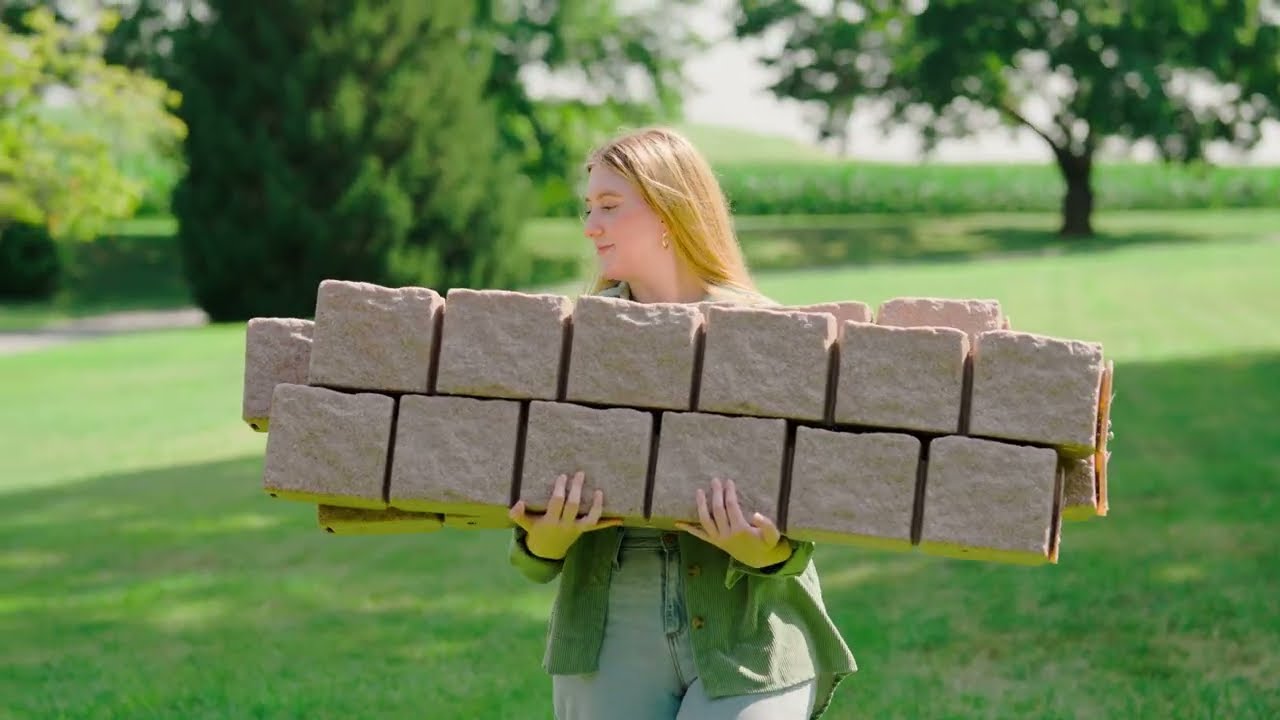
For Beuta, the proof was visual and immediate. After the hook line, the on-camera talent held up the faux stones, lifted them with one finger, and let the camera capture the impossibility of the weight versus the appearance. The viewer's brain processed it in real time: that looks like stone, but it can't be stone, because no one lifts stone like that. The contradiction in the hook resolved into a believable demonstration.
The key word here is believable. Believable doesn't mean staged or scripted. Believable means the proof matches the claim and the production lets the proof land. A jumpy edit, a cut that hides the demonstration, a voiceover that talks over the visual, all of these undermine the proof. The Beuta videos kept the proof in frame, in real time, in lighting that made it obvious what was happening.
This is where most outdoor product videos fail. The brand has a real product with a real story, and the production over-edits the demonstration into something that no longer feels like proof. The viewer's brain reads it as an ad rather than a discovery. The contradiction never resolves.
If you're building short-form video for an outdoor product, the proof needs to be visible, single-take or very close to it, and shown in the actual environment the customer cares about. A faux stone needs to be shown being lifted. A lightweight shed needs to be shown being moved. A modular outdoor structure needs to be shown being assembled. The proof is the product doing the thing the claim said it would do, in front of the camera, with no cuts hiding the work.
Decision three: trending sounds and SEO-rich captions

Here's the part most brands underweight. The hook stops the scroll and the proof earns the watch, but neither one finds the audience in the first place. Discovery is its own job, and it's not the job of the video content itself. It's the job of the metadata.
On TikTok and Instagram Reels, the metadata that matters most is the trending sound and the caption. Trending sounds aren't just background music. They're discovery infrastructure. When a sound is trending, the algorithm pushes videos using that sound to more viewers in the relevant interest cluster. Using a trending sound is essentially riding a wave the algorithm has already decided to promote.
For Beuta, the sound choices weren't random. The team picked sounds that were trending in landscape, home improvement, and DIY communities. The crossover audience was exactly the audience Beuta needed. The sound became a hashtag the algorithm could use to categorize and distribute the video to people who had recently watched similar content.
Captions worked the same way. The captions on the Beuta videos weren't decorative. They were keyword-rich, written with the search behavior of the target audience in mind. "Faux stone landscape edging" appeared naturally. So did "backyard ideas" and "easy install" and the other phrases buyers actually search. The caption was doing organic SEO inside a short-form video platform, which most brands don't even realize is possible.
The principle generalizes again. For any outdoor product brand, the caption should include the exact phrases your buyers use when they search. Not jargon. Not branded language. The plain-English phrases someone would type into TikTok search or Google when they're looking for what you sell. Combined with a trending sound that fits the audience, the discovery infrastructure does work the video itself can't do on its own.
Decision four: distribute across platforms simultaneously

Most brands take a single video, post it to one platform, and call it a campaign. Then a month later, they post the same video to a second platform. Then maybe a third. The sequential approach feels efficient. It's actually a leak.
Short-form video performs best when the same content runs simultaneously across TikTok, Instagram Reels, and YouTube Shorts. Each platform has a different audience, a different algorithm, and a different content discovery system. A video that's already getting traction on TikTok gives the Instagram version social proof signals to ride. A video that's working on Reels primes YouTube Shorts viewers who get the same recommendation. The platforms reinforce each other when content runs across all of them at once.
The Beuta campaign was built this way from day one. The hero hook video launched on Instagram and TikTok simultaneously. The proof segments cut differently for each platform's native pacing. The captions were optimized per platform. The total view counts (6M Instagram, 5M TikTok) were possible because both platforms were running the campaign in parallel, not because one platform was carrying the whole thing.
Most brands resist this because it feels like extra work. It's not actually extra work if the production is planned for it from the beginning. The same shoot day produces content for every platform. The editing produces multiple versions during a single edit session. The distribution becomes a copy-paste of the upload across three platforms instead of three separate campaign cycles. The cost per platform drops dramatically when production is planned for distribution.
The compounding effect: what happened after the first viral video

The interesting part of the Beuta story isn't the first viral video. It's what happened after. One video at 11 million views is a lottery ticket. The pattern of consistent strong performance across many videos is a system.
After the first hero video landed, countless others followed. The follow-up videos didn't all hit 11 million views, but many crossed hundreds of thousands. Social media following grew into the tens of thousands. The brand started showing up in landscape and DIY content recommendations beyond the original audience. The viral moment broke the brand into a category of awareness it hadn't had access to before, and the consistent content rhythm afterward kept the brand inside that category.
This is the part most brands miss when they look at viral content. The view count of the first big video isn't the prize. The compounding awareness, the algorithm familiarity, the audience trust, and the channel infrastructure that the first video builds — that's the prize. A single viral video without follow-up content is a flash. A consistent rhythm of strong content following a viral video is a brand.
Russell Brunson's frame on this is useful again. He calls it building a tribe. The viral content gathers people. The consistent follow-up content keeps them. The mistake brands make is celebrating the viral moment and then going back to inconsistent posting, which lets the tribe disperse. The Beuta team didn't make that mistake. The content rhythm continued, and the audience compounded.
The exact playbook, step by step
If you run an outdoor product brand and you're trying to figure out whether this approach could work for you, here's the playbook compressed into a step-by-step framework. Each step has been pulled from the actual Beuta work. No theoretical filler. Just what we did and what worked.
Step one: find the contradiction in your product
Every outdoor product worth marketing has at least one. The thing that defies expectation. The detail that makes a customer say wait, that can't be right. For Beuta, it was lightweight stone. For a shed company, it might be how fast a custom structure goes from order to install. For an equipment manufacturer, it might be a single operator doing the work of three. Find the contradiction. That's the seed of every hook.
Step two: write the hook in one sentence
One sentence, eight to twelve words. Phrased as a question or a challenge. Lands in 1.5 seconds when spoken aloud. The hook is harder to write than people expect. Plan to write fifty hooks for every one that works. The Beuta hook went through multiple iterations before it landed.
Step three: plan the visual proof
Decide before you shoot exactly how the proof of the claim will show up on camera. What action shows the contradiction resolving? What setup makes the proof obvious without explanation? Sketch the shot in advance, then film it with the proof in frame and as little editing as the format allows.
Step four: pick the platform-appropriate sound
Spend an hour scrolling each target platform with a notebook. Identify the sounds currently trending in your customer's interest area. Use the sound that's trending, fits the visual pacing, and won't be played out within two weeks of your post. Don't pick a sound just because it's trending overall. Pick the one that's trending in the niche you serve.
Step five: write captions like search results
The caption is not a description of the video. It's a list of phrases your buyer would type into a search bar to find what you sell. Write three to five of those phrases into the first two sentences of the caption. Make it readable, not stuffed. The platform algorithm uses the caption to categorize the content and the search box uses it to surface the video later.
Step six: distribute across at least three platforms simultaneously
Post the video to TikTok, Instagram Reels, and YouTube Shorts within the same hour, with platform-specific captions but the same core video. Don't wait a week between platforms. Don't wait a day. The simultaneous launch lets the platforms cross-reinforce each other on early signals.
Step seven: plan the next ten videos before the first one publishes
This is the step almost no brand does, and it's why most viral moments don't compound. Before the first hero video goes live, the next ten videos should already be planned, scripted, and scheduled. The follow-up rhythm is what turns a lottery ticket into a system.
What this means if you're an outdoor product brand
If you've read this far, you're probably running an outdoor product brand and wondering whether this is something your business could realistically pursue. Honest answer: it depends on three things.
First, your product needs to have a visual contradiction worth showing. Not every product does. Some products are excellent but visually unremarkable, and that's fine. Those products win on other content formats (long-form educational video, brand story film, customer testimonials). Short-form viral video isn't the right strategy for them.
Second, your team needs to be willing to commit to a consistent content rhythm after the first big video, not just chase the viral moment. Without the follow-up rhythm, the audience disperses and the work doesn't compound. If your team isn't ready for a sustained quarterly or annual content cadence, hold off on the viral push until the foundation is in place.
Third, you need a creative partner who understands both the strategy and the production. Most agencies can produce video. Far fewer understand viral strategy specifically. And the ones that understand viral strategy often don't have the production craft to actually execute. The combination is rarer than it should be.
If those three things are in place, short-form viral video can be one of the highest-leverage marketing investments an outdoor product brand makes. The ceiling on organic reach is dramatically higher than most other channels. The cost per view is dramatically lower than paid advertising. And the brand awareness compounds in a way that paid channels can't replicate.
The honest qualification
This isn't a guarantee that following the Beuta playbook produces 11 million views. We've used the same framework with other brands and the numbers have been different. Sometimes much smaller, sometimes still very large. The exact view count depends on the product, the timing, the platform algorithm shifts that nobody fully controls, and a hundred other factors.
What the playbook does guarantee is that you'll be running the same plays the brands that actually go viral are running. You won't be guessing. You won't be posting and hoping. The framework gives you the structural advantage. The execution and the product determine where on the spectrum you land.
For Beuta, the spectrum landed at 11 million views and a fundamental shift in the brand's visibility in the landscape product category. That kind of outcome isn't guaranteed for every brand. The framework that produced it, though, is replicable. And the brands that try it tend to do better than the brands that don't, even when the outcomes are smaller.
If you want to talk through what this could look like for your brand
If you're running an outdoor product brand and you want to think through whether short-form viral video makes sense for your business, schedule a strategy call. We'll walk through your product, your audience, and whether the contradiction-and-proof framework fits what you actually sell. If it does, we'll talk through what a campaign would look like. If it doesn't, we'll point you toward the content format that fits better.
No pressure, no pitch. The brands that get the most out of these conversations are the ones who come in with a real product and a willingness to think out loud about what their next year of content should accomplish. We're built for those conversations.
